Request-first, not checkout-first
Customised objects are quoted and confirmed before payment, so buyers are never pushed through a cart that cannot capture their choices.
Sister-brand venture
PoraPop grew from a first drop into a live shop, but its customised, made-to-order objects needed a way to sell that stays personal instead of forcing a standard checkout.
Context
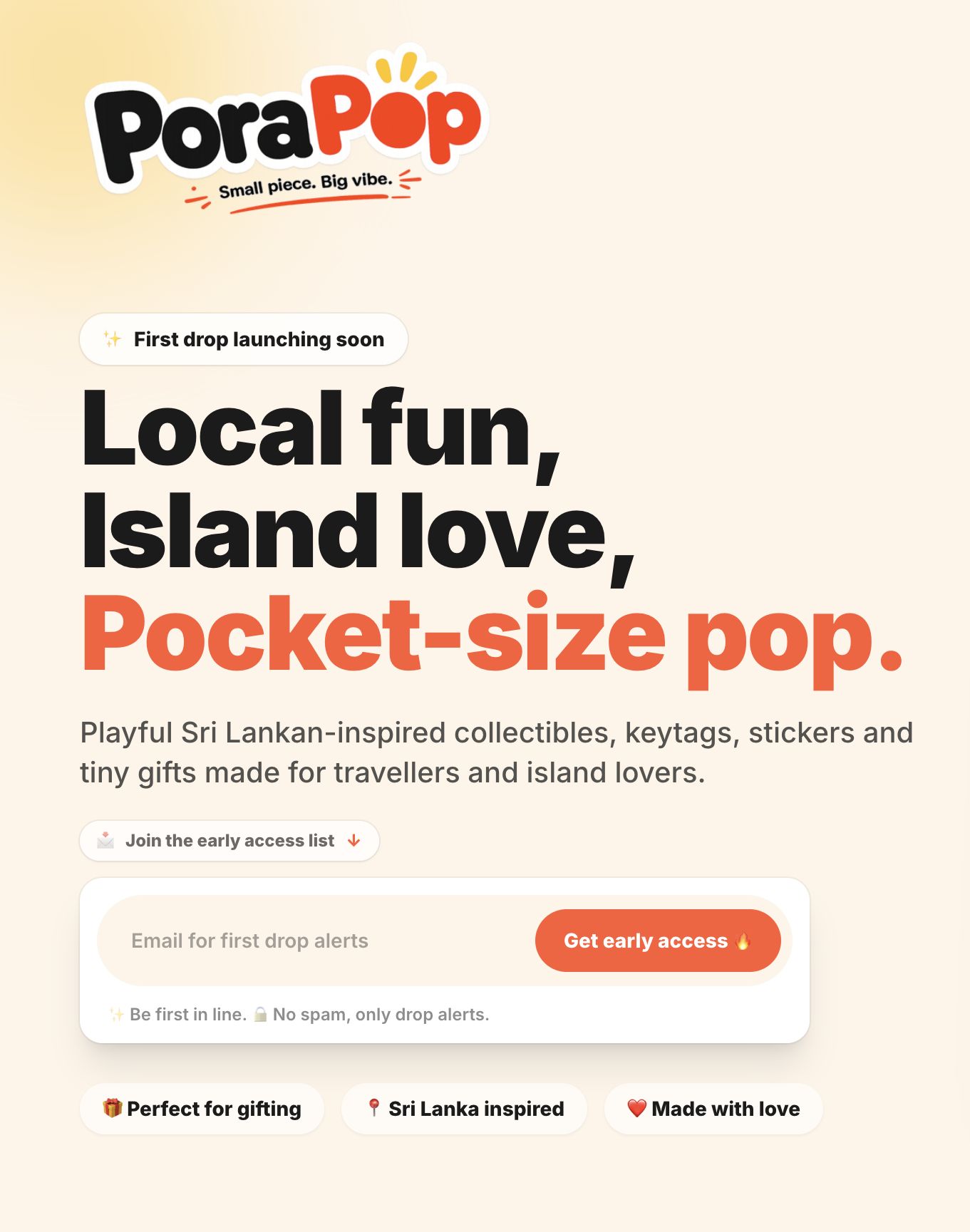
PoraPop is a playful sister brand within Amarosige, making Sri Lankan-inspired collectibles, keepsakes and small gifts.
Since its first drop, PoraPop has grown into a live shop. But its objects are customised and made to order, so a standard add-to-cart checkout would hide the choices that matter and push people to pay before anything is confirmed. Ordering needed to stay personal while still feeling simple.
The challenge
The strategy
The shop uses a request-first model: browse the collections, choose your options, submit a request, receive a quote by email or WhatsApp, then pay once it is confirmed. A real person reads every request.
Email signup keeps early supporters informed of new drops without slowing down the core buying journey.
Important decisions
Customised objects are quoted and confirmed before payment, so buyers are never pushed through a cart that cannot capture their choices.
The ordering promise stays human and reassuring, which suits a small-batch, made-to-order brand.
WhatsApp and email requests replace a rigid funnel, matching how customers here prefer to reach out.
PrintedSoul photo keepsakes and sister brands are connected so the range feels broader without cluttering PoraPop.
Delivered outcome
PoraPop is one of our own brands, so this shows our brand and commerce thinking rather than a client speaking on our behalf.
Related challenge
We can design a request-first journey that keeps ordering personal while still feeling effortless for the customer.
Discuss a commerce UX project